Resource Type: Articles

Stacey Stahl

Dominick Mongiove Jr.
Elizabeth Fefer
Jessica Meade
Vicky Cabanas
Dominick Mongiove Sr.
Why Choosing the Right Serving Line Is Good Business
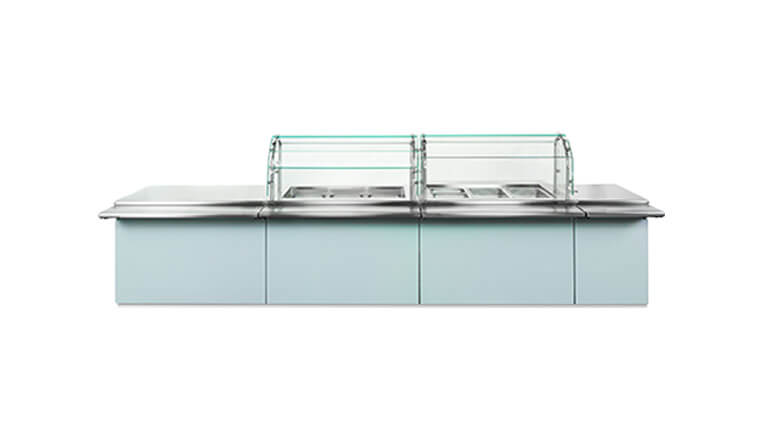
While aesthetics and functionality are always top of mind when considering a new serving line solution, it’s important that operators also consider the business angle of this decision. In this article, we’ll look at modular serving lines and custom serving lines through the lens of how each option could affect an operator’s bottom line now and throughout the lifetime of the product. In the end, the right solution greatly depends on the operator’s realistic day-to-day use and their operational goals.
WHY GO MODULAR?
Modular serving lines offer fantastic maneuverability and as a result, lots of operational flexibility. The units’ ability to be nimble can help make operations more agile, leading to multiple business benefits.
Keep cleanliness up and labor down.
As modular equipment is built to be moved around as often as needed, keeping things tidy can be as easy as rolling the units out of the way, thoroughly cleaning their space, and rolling them back. Not only can this efficiency result in a safer, more sanitary environment for guests, but it can also save on labor costs.
Adapt and grow.
Another advantage that comes with modular serving lines is the ability to reconfigure as operational needs shift, be it each day or each year. For example, a standalone cart could be placed in a corridor for a morning grab-n-go revenue driver, and later moved to the main dining area to support the lunch rush. Choosing modular units can also be an ideal route for an operator who needs equipment now and is aware of a future expansion that will require adding matching equipment later. Even just having the option to create a fresh look or an inviting setup is a positive, as these small efforts can encourage added customer traffic.
WHY GO CUSTOM?
Custom serving lines offer the perfect solution for operations looking to make an impression.
Make your mark.
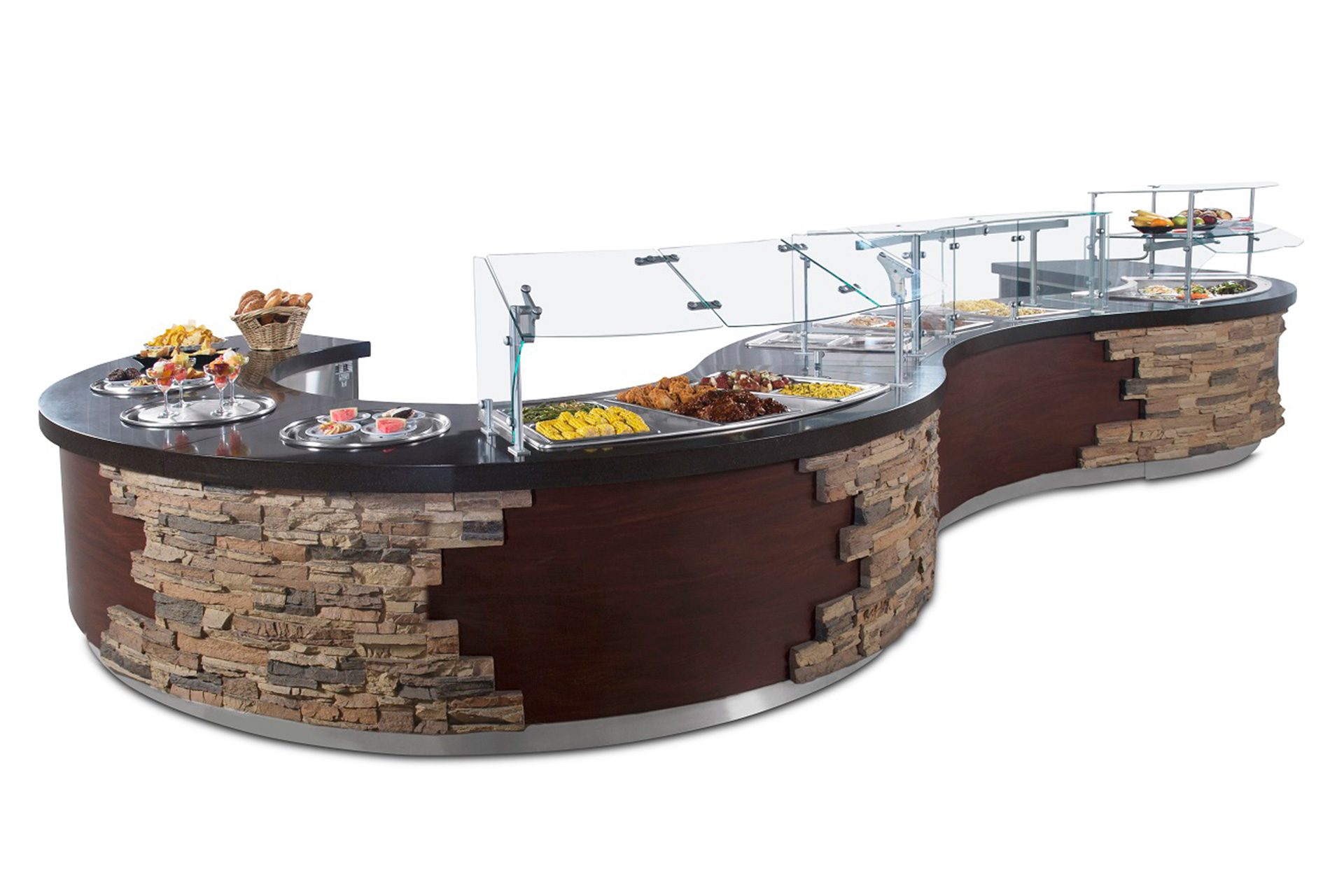
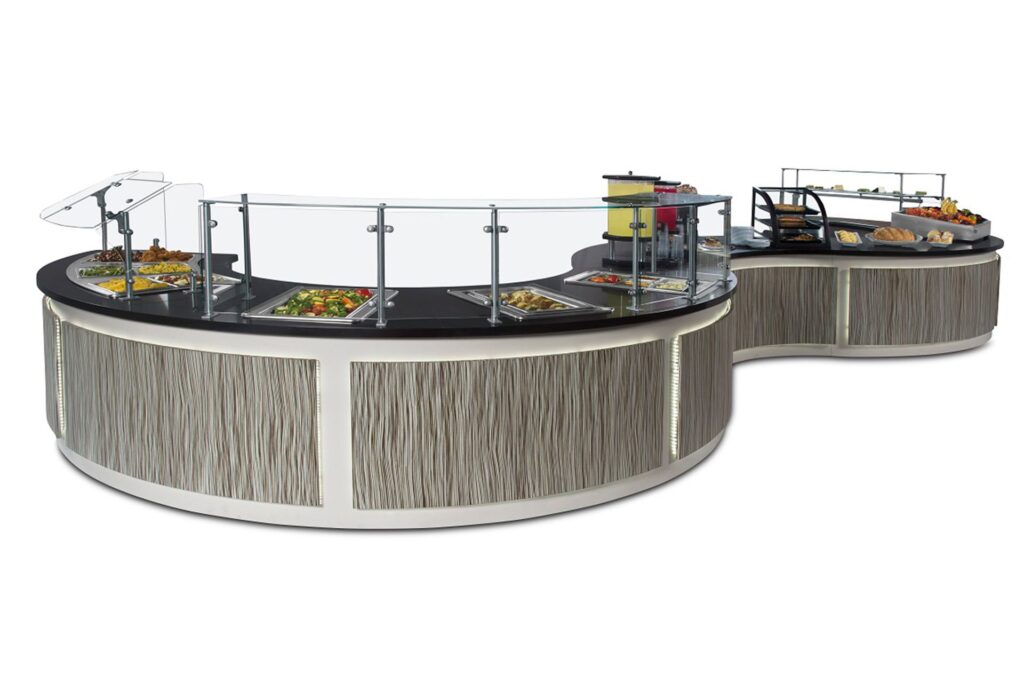
When operators can handpick touches like curved edges and solid surface tops, they are essentially guaranteeing that their serving line will be the only one of its kind. For operators who are serving discerning guests or looking to stand out among the competition, a custom serving line provides yet another finely crafted, detail-oriented touchpoint with which to build customer loyalty.
Play to the space.
Additionally, custom lines provide a viable option for operations that have unique spaces or setup requirements. Whereas modular units are prebuilt to standard sizes and styles, and then combined to create a serving line, custom units can be assembled and even welded onsite to ensure a perfect fit.
LOOKING DOWN THE LINE.
One last aspect to consider is that custom serving lines generally come at a steeper initial cost than modular serving lines. Considering the comparatively higher price point and the fact that they are generally stationary or permanent installations, custom serving lines will offer the most return on investment when they’re able to be utilized as installed for years to come. On the flipside, a modular serving line could be a great fit for an operation whose future plans require more flexibility.
Custom and Modular Options from Atlas Metal
If you’re looking for premium handcrafted quality in your next serving line, Atlas Metal has you covered with the INFINITI custom series or the new INFINITI FIT modular series. With unlimited options for customization, we can help you provide the perfect equipment solution for any customer’s signature look. All manufacturers claim their equipment is durable and reliable. We could say the same things too, but we’ve found that a hands-on approach to doing business is what makes us different.
6 Quick Tips for Spotting Premium Serving Equipment
There’s no shortage of options to choose from when it comes to foodservice serving equipment. While it’s good to have an array of choices, it’s also helpful to know how to find true quality and durability.If you’re looking for serving line equipment that’s made to perform and built to last in your customers’ kitchens, keep these fail-safe tips in mind.
1. Look at material choices and design.
The equipment should be focused on strength as well as finish standards—you shouldn’t have to compromise one for the other. Remember, thicker or heavier weighted steel is generally better quality and more durable.
2. Understand plant processes.
You’ll feel more comfortable making a decision if you can talk to a friendly and knowledgeable representative from the company or even visit the plant yourself. The rep should be able to talk with you about the manufacturer’s contemporary sheet metal processing technology and whether it’s repeatable and consistent. All products should be inspected for safety and performance, too.
3. Fabricate, fabricate, fabricate.
Fabricated pans can be a better option than drawn-down pans that are stretched or stamped out of sheet metal. That’s because fabricated pans have a more consistent material thickness across each plane, helping them withstand operational demands of shrinking and expanding in varying temperatures. To tell whether a pan is fabricated, pick it up and knock on it. It should feel heavy, and the sound should be deep, not tinny.
4. Go for the gasket.
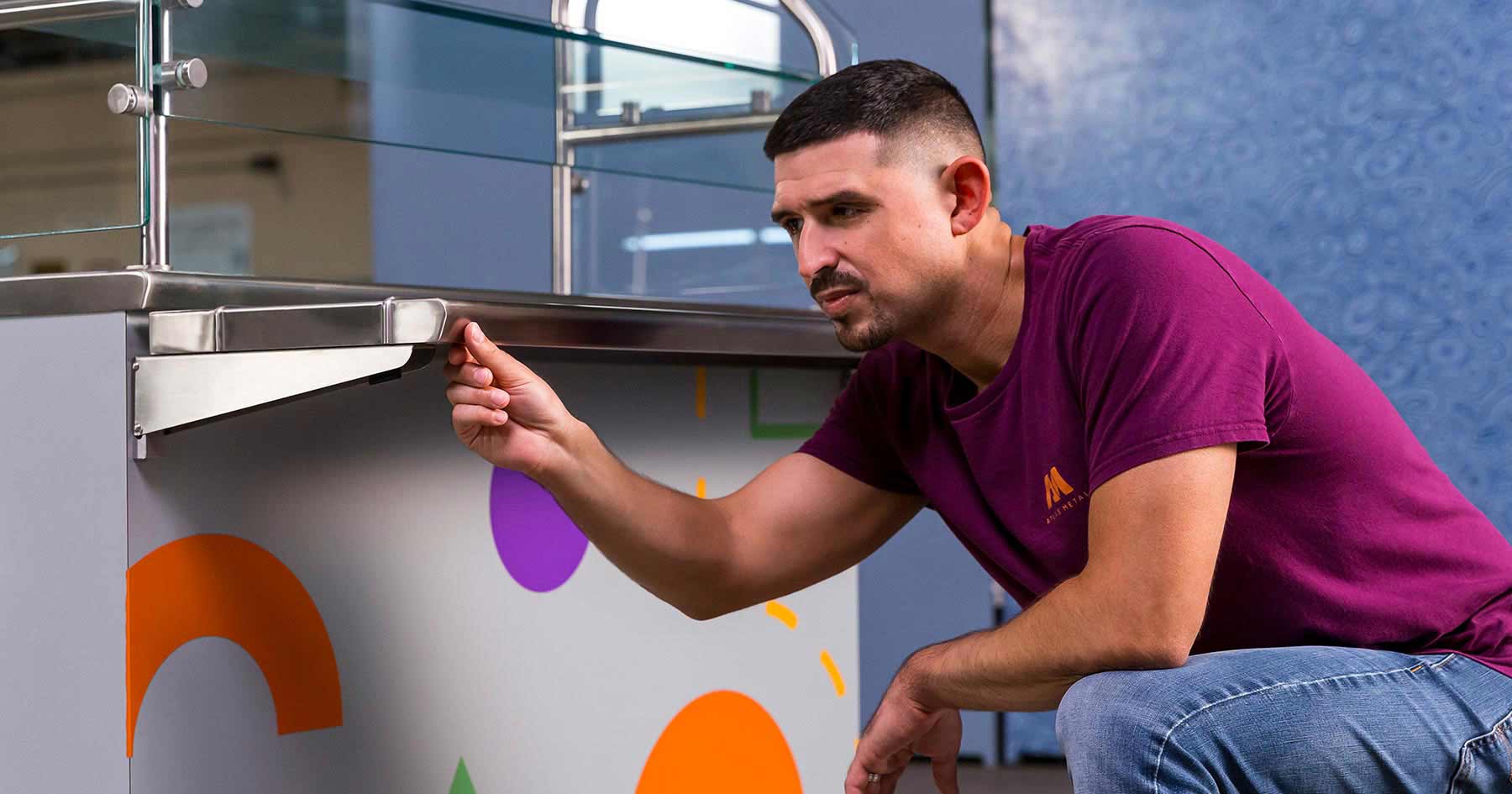
High-quality equipment should have a beaded edge top frame with sealing gaskets on pans. Beaded edges provide added strength for support and offer a measure of water containment for spills. There should also always be a built-on gasket, which allows for direct installation onto any substrate without scratching or leaking. Preinstalled gaskets also save the labor and time of having to place the gasket yourself or ask your customers to do it.
5. Make sure it’s finished.
Your customers wouldn’t serve an unfinished dish, so why would a manufacturer sell an unfinished piece of equipment? Exposed, raw edges can be sharp and can catch on things. All seams should be fully welded, especially on equipment that’s used in the back of house. Check to see whether there are extra bends in the equipment that prevent raw edges.
6. Evaluate the insulation.
Premium equipment should have comparatively greater amounts of insulation for efficient performance. It might seem like a standard check, but insulation is often overlooked or compromised for other fancy features. In the end, it’s the insulation that’s going to help retain heat or keep things colder longer.
Finding the right piece of equipment isn’t always easy, but this checklist should help alleviate some stress when you’re creating specifications for your customers, no matter their serving needs.
About the Atlas Metal INFINITI Series
If you’re looking for the right balance of design and durability, the INFINITI series is the way to go. With unlimited options for customization, we can help you provide the perfect equipment solution for any customer’s signature look. Because at Atlas, we make serving equipment—but we go about it a little differently than the other guys. All manufacturers claim their equipment is durable and reliable. We could say the same things too, but we’ve found that a hands-on approach to doing business is what makes us different.
Equipped for Success: How to Tackle K-12’s Toughest Tests
UP TO THE CHALLENGE
For K-12 operators, today’s foodservice landscape is an obstacle course, with new hurdles emerging every day. By taking a closer look at these challenges and developing potential solutions, operators can get the help they need. And most importantly, they can get back to doing what they love–serving and delighting their students.
Many of the industry’s current stressors stem from three core issues, the first of which is inflation. This specific headwind is so prevalent that 99.8% of school meal program directors cite rising costs as their top challenge.1 Inflation appears to be affecting those on the other side of the counter, too. Over the course of a year, student participation in paid meals dropped by 13.2% for lunch and 23.1% for breakfast.1 Layer on the lingering equipment and parts shortages, noted as a hindrance by 48% of school meal program directors, and it’s clear that a little extra support would go a long way in any K-12 operation.
FINDING ANSWERS
When seeking a helping hand, operators can start by analyzing the versatility of their equipment. Moving toward a multifunctional setup can reduce the impact of rising costs, strained resources and low participation.
One example is utilizing serving equipment that can operate as self-serve or staffed, making it easy to adapt based on labor fluctuations or daypart. This could even be part of a larger modular solution, which would feature various units that are designed to pivot based on traffic and ever-evolving menus.
Operators can also boost student participation by catering to the trend of upgraded meal experiences, especially in high schools, where offerings are starting to rival that of colleges and universities. Equipment that features streamlined functionality and higher-end finishes can help elevate the dining experience and get students excited about each meal.
TRUSTING THE RIGHT PARTNER
Atlas Metal specializes in handcrafted serving lines and drop-ins that provide aesthetic appeal and decades of durability. In the company’s INFINITI FIT modular lineup, 16-gauge stainless steel tops, stainless steel frames, high-performance casters and spring-activated “locking horn” technology all contribute to a clean, striking visual appearance and tight, solid feel in any setup. Atlas Metal drop-in pans are also handcrafted with thick-gauge steel, maximum insulation and preinstalled gaskets for zero seepage and optimum temperature control.
Operators can mix and match modular units to create a serving system that fits perfectly in their footprint. If a fully custom job is the answer, Atlas Metal has the experience and hands-on knowledge to deliver a solution that is truly one of a kind.
Atlas Metal has been “Making Metal Personal” since 1948, never cutting corners and always doing right by its customers. For operators who value a hands-on approach to product quality and service, this family-owned, Miami-based company is the ideal partner.
(Source)
1SNA, 2023 School Nutrition Trends Report